What is the difference between the Lao rafting routes, and which one suits a first-timer?
By River Tribe Adventure · Updated July 2026
Relevant team expertise: Antonio Trani · River Tribe founder · grade V rafting guideIf you have never held a paddle, the reference is the shortest descent, the Fun Trip: it lasts about an hour and exists to let you get used to the raft, to the guide's commands and to the water. The other routes are not "the same trip, longer". River Walking + Rafting alternates paddling with sections walked inside the gorge, the Grand Canyon covers a longer stretch and is the most representative descent of the Lao canyon, while the two-day expeditions assume participants who are already fit. The real difference is not only duration: the stretch of river, the minimum age, the preparation required and the time actually spent on the water all change. The final stretch is confirmed by the guide on the day, based on flow, weather and the make-up of the group.
What actually changes from one route to another
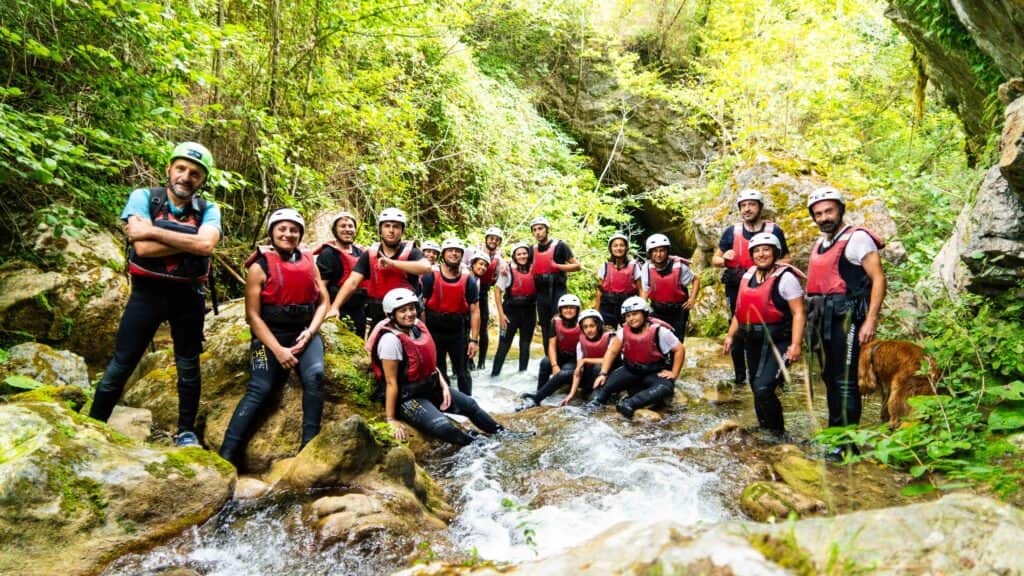
Every descent has a card listing duration, level, minimum age and price, and it is those four figures that separate the options, not the scenery. The Fun Trip stays on the shortest and most manageable stretch; River Walking + Rafting adds the section on foot inside the gorge, so it requires walking in water over uneven ground; the Grand Canyon takes in a longer portion of the canyon and asks you to paddle continuously for longer. The two-day expeditions are a different category altogether: they involve a bivouac, logistics and a level of self-sufficiency you do not improvise on a first outing.
Your first descent: what to expect
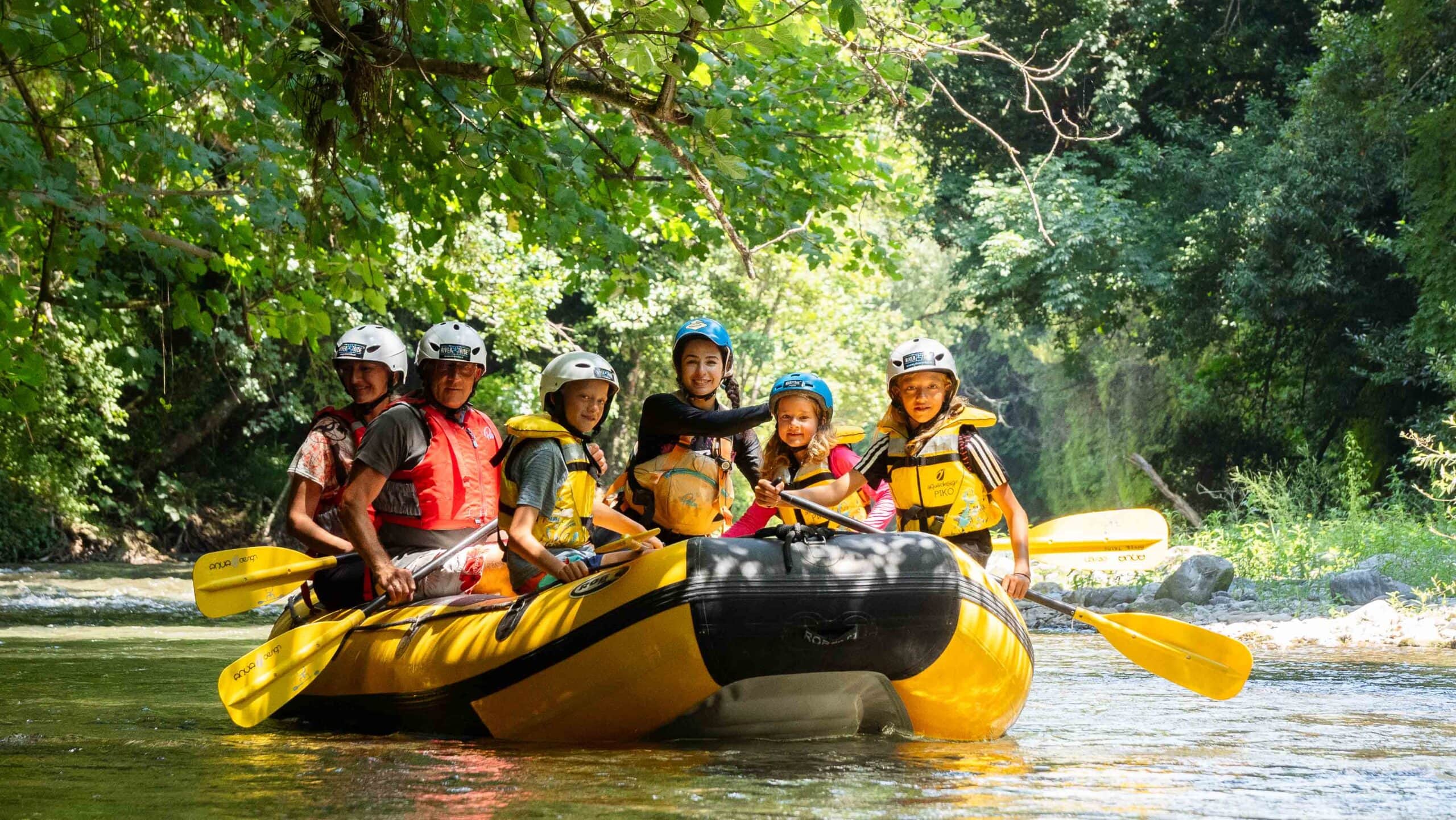
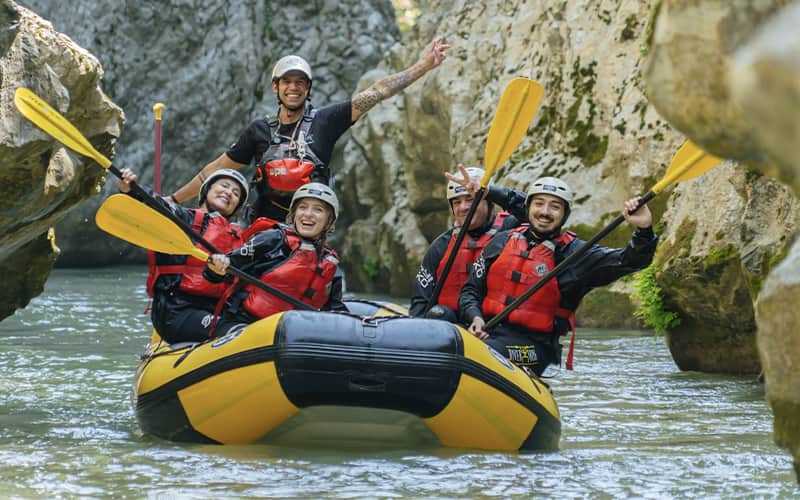
Every descent starts on land with kitting up and the briefing: the guide explains how to hold the paddle, what the commands are, what to do if you end up in the water and how you get back on board. Wetsuit, helmet and buoyancy aid are provided; the guide stays in the raft with the group for the whole descent. You do not need to swim competitively, but you do need to be comfortable in water and to follow instructions in real time — which is why the briefing is not a formality.
When a route is not right for a beginner
A route is unsuitable when the minimum age on the card is higher than the youngest participant, when the description explicitly asks for good physical preparation, or when the duration exceeds the group's real energy — an afternoon on the water with tired children is not a good idea. Some days it is the river that decides: with low flow, or after heavy rain, the guide may move the group to a different stretch or reschedule. That is an operational decision, not a mishap.
How to choose in practice
Three questions usually settle it: how old is the youngest participant, how much time do you genuinely have that day, and how comfortable are you in water. With small children or a mixed group, start with the shortest route and come back for more. At weekends and in high season places go first: asking about availability a few days ahead saves you from falling back on a route chosen only because it was the last one free.
Frequently asked questions
- Do I need to be able to swim to go rafting?
- You do not need to swim competitively, but you must be comfortable in water. Buoyancy aid and helmet are compulsory and provided, and the guide explains before departure what to do if you end up out of the raft.
- What is the shortest route for a first time?
- The Rafting Fun Trip: about an hour on the water, designed as a first approach. It is the recommended starting point if you have never been in a raft.
- What is the difference between Fun Trip and Grand Canyon?
- The Grand Canyon covers a longer stretch of the canyon, takes more time and asks for more sustained paddling. The Fun Trip stays on the shortest stretch. Duration, level and minimum age are listed on each descent's card.
- Can I decide the route on the day?
- The route is agreed when you book, but the guide confirms the actual stretch on the day based on river flow, weather and the group.