By River Tribe editorial team · updated July 15, 2022
Laino Borgo and surroundings…
River Tribe's proposals on what to do and what to see, including local culture and traditions. Visit to the ancient villages of Laino, Mormanno, Papasidero, Rotonda.
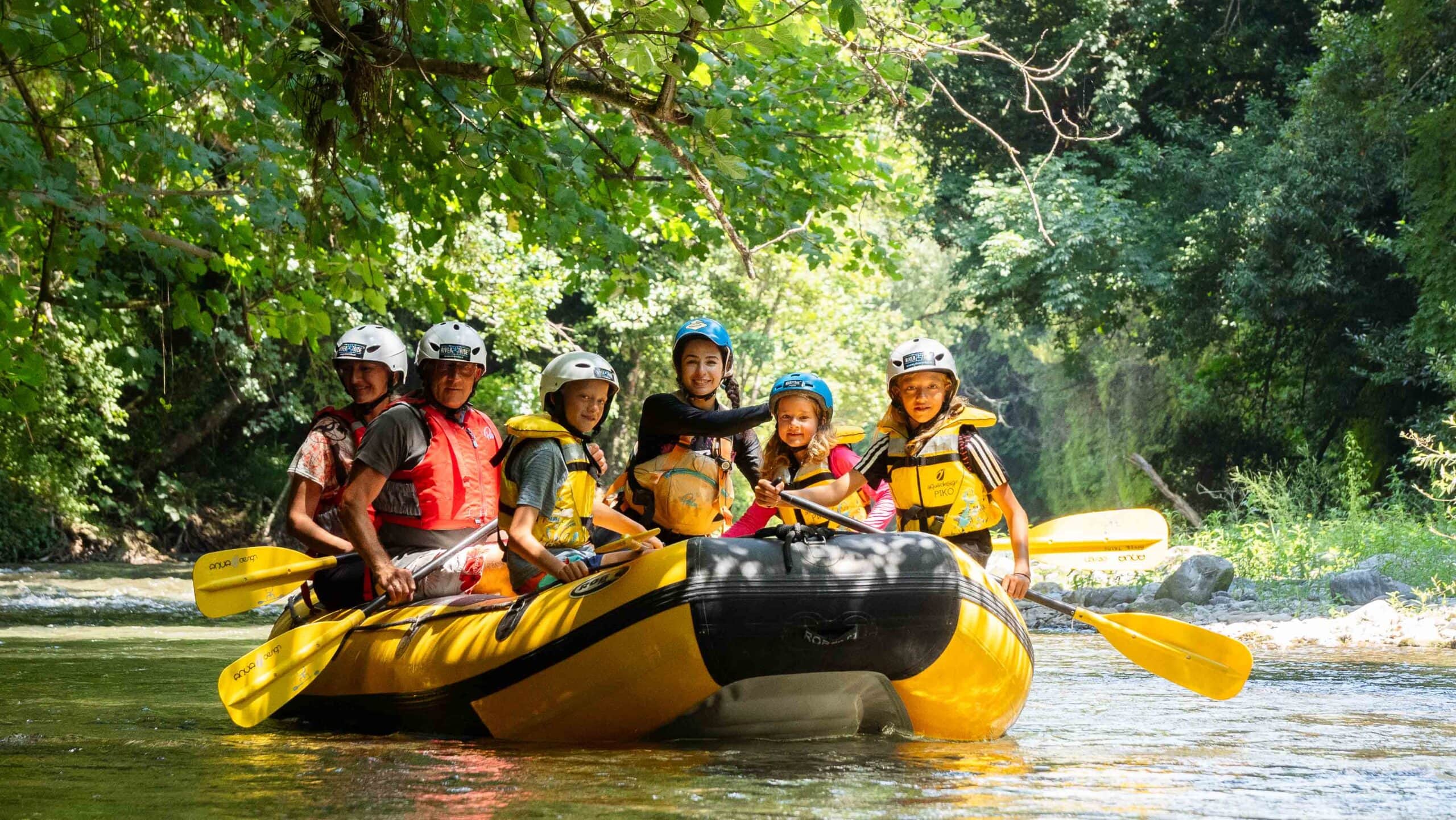
In addition to Rafting, River Tribe offers you what to do and what to see, including local culture and traditions.
Visit Laino Borgo and its attractions, find out what to see and do in Laino Borgo. Some suggestions to make your stay with us even more interesting.
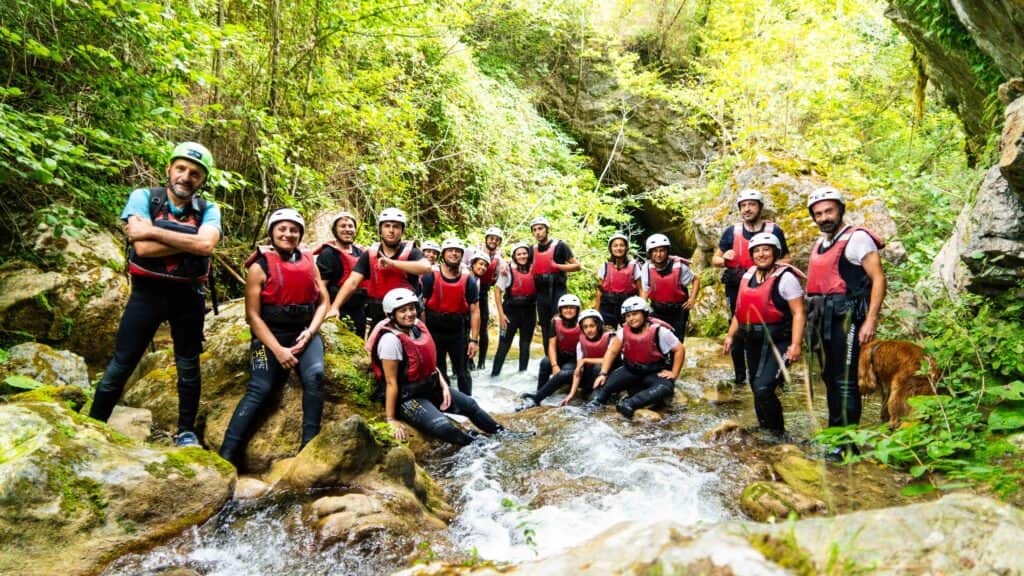
Laino Borgo is the first Calabrian village you come across when coming by car from the North, on the Mediterranean A2. Its territory is an integral part of the Pollino National Park which has been recognized as a UNESCO World Geopark since 2015. Laino Borgo, which takes its name from Lao River, is one of the Calabrian destinations preferred by sportsmen and lovers of nature and speleology. It has several caves in its territory, some of which are of archaeological, historical and botanical interest. Among the most important, in the localities of Malomo and Traversa, are the so-called Caves of the Brigands. The very position of the small village allowed us to practice various outdoor activities: from the Rafting (exploring one of the most evocative canyons in Europe) to the Kayak, to Sup passing from the Trekking to the Mountain Bike.
Once the activities are finished, the time comes to enjoy the area we are in, with its beauty, good food and its traditions.
If you are looking for an eco-sustainable stay, you can choose between the beautiful widespread hotels located in the ancient villages, the ecological Bed&Breakfasts and the welcoming organic farmhouses and above all our Base Camp.
A treasure chest of biodiversity equipped with its own services where you can best spend your stay at the foot of Pollino. From the classic Canadian tents to the Glamping, a chic alternative to traditional camping, which allows you to stay immersed in nature but without giving up the comforts of a hotel room; memory mattress, kettle for herbal teas and clean linen for guests. A true luxury but in close contact with nature, not least the Tentsile, or tents suspended between the trees. The new treehouses 2.0, all created for those, like you, who are not satisfied with just visiting a place, but want to experience new emotions. Choosing to spend your holidays in our facility means treating yourself to a different and slower time, the best way to enjoy the flavors of the earth and re-establish contact with nature and its beauties.
LAINO BORGO
Distance from Base Camp: 2 km
Altitude: 271 m above sea level
The historic center is characterized by alleys capable of channeling the gaze onto the numerous natural views that surround it. Hidden courtyards, small churches, artistic stone portals, noble palaces and beauties that culminate with the visit of the Mother Church of the Holy Spirit. It is a place rich in history and centuries-old traditions and boasts an artistic-cultural heritage consisting of a 16th century Sacred Mountain, numerous churches and stone portals. The visit to the historic center, among the intersecting streets, allows you to admire the numerous stone portals made by local artisans. A tour of the murals even at night makes the atmosphere truly magical and romantic.
LAINO CASTELLO OLD
Distance from Base Camp: 1 km
Altitude: 525 m above sea level
A municipality composed of a historical nucleus, an ancient village and a more recent nucleus populated after the 1982 earthquake. Defined as the ghost village in the Pollino mountains, it is an abandoned village, today in the process of being rediscovered thanks to its glorious past. Laino Castello until 1470 together with Laino Borgo, Laino was a single municipality. Subsequently, the hill of S. Teodoro, where the old Laino Castello stands, was chosen by the Lombards for its strategic position, who, in the war with the Byzantines who were about to succumb, built a castle there which became among the most important in southern Italy. It still dominates the valley at the bottom of which the Lao flows in a deep, wooded canyon of fabulous beauty.
ROUND (PZ)
Distance from Base Camp: 11 km
Altitude: 580 m above sea level
Rotonda is located in the Mercure Valley in the south-western part of the Basilicata, and in ancient times it took this name from the layout of its buildings, located so as to appear to be a single round block with the castle in the centre. The oldest part of Rotonda is a succession of narrow and steep streets, stone stairs and houses with splendid portals, while only the remains of the castle remain on the top of the ancient nucleus. The most important naturalistic attraction of the village of Rotonda is the old-growth beech forest of Cozzo Ferriero, recognized as a UNESCO World Heritage Site for its exceptional universal value. From Rotonda you can reach the Cascata del Paraturo (or del demonio) on foot, via the path of the same name, after entering the Fosso Paraturo. In the Naturalistic and Paleontological Museum of Rotonda, among the various fossil finds, on display are, among other things, the restored remains of a specimen of Elephas antiquus italicus from the Middle Upper Pleistocene (400,000 – 700,000 years ago) found in 1982. To be enjoyed between one break and another, the two D.O.P. excellences: "Rotonda white beans" and "Rotonda red aubergine", to which a renowned festival is also dedicated which takes place at the end of August.
MORMANNO
Distance from Base Camp: 7km (15 min by car)
Altitude: 840 m above sea level
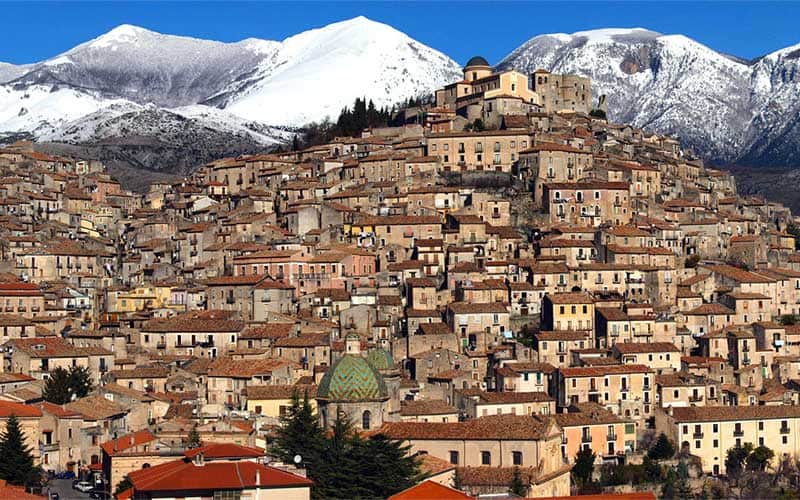
Among the most beautiful villages of the Pollino, perched between two slopes of Monte Vernita and Monte Costa, the ancient village of Mormanno, located in the heart of the National Park, seen from above has all the charm of a nativity scene. As soon as you arrive, the Mormanno lighthouse is clearly visible, one of the few mountain ones in Italy, built in 1928 in honor of the Calabrian soldiers who fell in the First World War. Today the Votive Lighthouse, in addition to being a place of historical-artistic and architectural interest, is the symbol of Mormanno. In the tiny main square, adorned with classical and medieval remains, stands the large church of Santa Maria del Colle, a vast building with three naves, a Baroque remake of an older church of which today only the bell tower remains. A few steps away you will find Lake Pantano, an artificial lake that was created as a dam for a hydroelectric power plant and which today is one of the favorite places for canoeing and kayak lovers. A must is the tasting of its prized legumes, such as lentils, white beans and bocconotti: the pride of Calabrian gastronomy.
PAPASIDERO
Distance from Base Camp: 25 km
Altitude: 210 m above sea level
On the slopes of the hill, on which the town stands, flows the fascinating Lao River. Worth visiting is the 17th-18th century sanctuary of Our Lady of Constantinople and the archaeological site of the Grotta del Romito. Characteristic is the medieval historical center with the mother church of San Costantino and the Norman-Swabian castle at the top of the village. The medieval city walls have ancient entrance gates to the village, among which that of the Changing of the Guard is still preserved. Mandatory stop: The Grotta del Romito, a site dating back to the Upper Paleolithic. Discovered in 1961 and over the years it has yielded a notable quantity of lithic tools, tombs and rock figures.
For further information, we recommend you also read:
Civita, between history, traditions and rafting
Morano through the Parks Cycle Route