By River Tribe editorial team · updated July 13, 2026
How Canyon del Lao was born: water, rock and time
The Canyon del Lao explained simply: how water shapes the limestone rock, why the gorge changes and what to observe during a descent.
The Canyon del Lao was not drawn in a single event. It is the result of water, rock and time: the river has followed fractures, eroded the most vulnerable points and transported materials, progressively deepening the gorge.
Limestone reacts to water in a particular way. In addition to the mechanical erosion produced by the current and sediments, dissolution processes occur which widen cracks and contribute to karst forms. Walls, cavities, springs and narrow passages tell of this relationship.
The canyon is not still. Rain, floods, rock falls and seasonal variations modify the current and deposits. For this reason, no descent is identical to the previous one and the guides observe the river every day, without treating it as an artificial route.
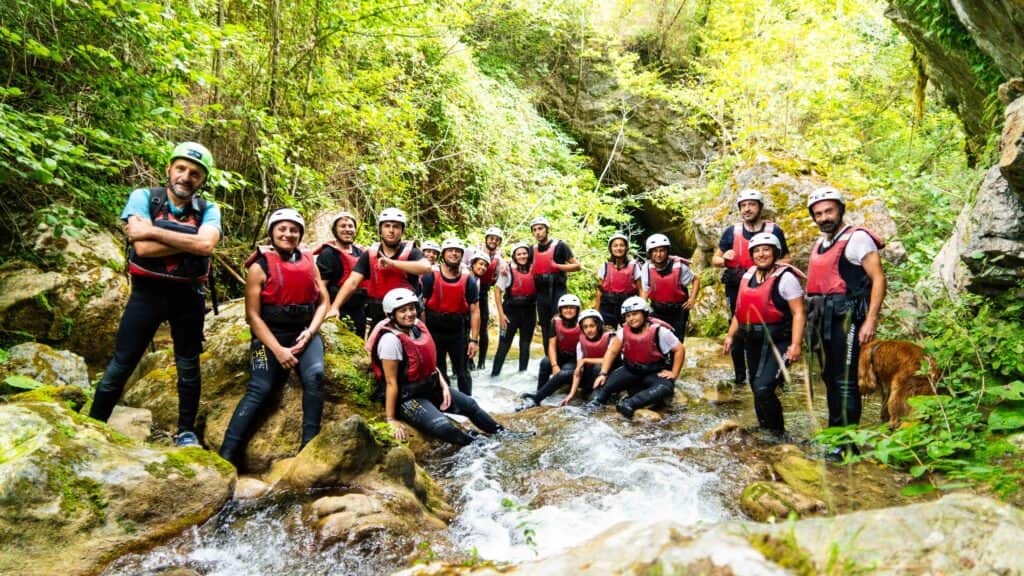
During the rafting it is useful to look beyond the rapids: layers of rock, vegetation occupying the wetlands, changes in light and sections where the noise fades. Many details can only be seen from the water.
Knowing the geology does not take away the magic of the landscape; it gives it depth. When you enter Canyon del Lao, you are going through an ongoing process. The most important rule is to respect the pace and conditions.